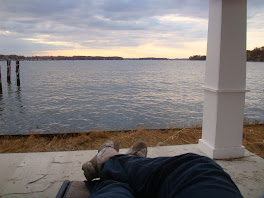
Thursday, April 14, 2016

Random Thoughts of a Lazy Genealogist

As a member of www.ancestry.com for the last 19 years, I have invested countless hours in building a family tree that includes over 22,000 people--not just my family but those of my husband, my daughter- and son-in-law, and to some degree the families of my husband's siblings' spouses and the spouses of my aunts and uncles.  I don't regret doing this, in part because the act of doing the work is like walking through a cave with a flashlight.  You shine your light at one part of the cave, and you will see something different from what you'll see in any other part of the cave.  If you are interested in rock formations--or family formations--it's quite fun.

Over the years www.ancestry.com has become much more sophisticated in assisting the genealogist by developing a search engine that can bounce records or "hints," as ancestry.com calls them--census data, birth/death certificates, tax records, probate records, and data assembled by other genealogists, etc--to the genealogist based on the names, dates, and locations the genealogist has entered into her/his tree.  Many of these records are indexed to link information on a series of family members associated with the record, e.g., a birth record will include the names of the mother and father as well as the baby's name, and these names and the associated data can be added to the tree with a few clicks.  This is quite amazing to someone like me who has spent a career trying to link together information from disparate sources.

The downside of this advancement, however, is that it has enabled me to become a lazy genealogist, especially when combined with the fact that my tree is enormous.  I've become dependent on www.ancestry.com to feed me records now, whereas before, I used to dive in the data that ancestry.com offered me (conveniently arranged based on what appeared to be most likely to be associated with my research subject).

As in the case of many things in the United States that are available for better or for worst, self-discipline and good judgment are the keys to addressing a wealth options.  I give myself credit for good judgment--I am judicious now at deciding what to add to my tree, recognizing that just because ancestry.com might pop up a hint that it thinks is related to one of my tree members doesn't mean that it is related.  You actually have to think about it to confirm that time/place/and name all fit.  

I know many ancestry.com users are careless about this because when ancestry.com offers me hints that another genealogist has assembled regarding an individual and the individual's immediate family, I've noticed that some have associated individuals with the same last name to be parent and child when the child's birth date is earlier than the parent's or made similarly irrational connections.  Initially, I trusted my fellow genealogist's family trees on such things without attending to these details but learned a hard lesson in doing so, because mistakes in genealogy compound very easily. I have on occasion had to delete a dozen or so individuals from my tree to correct for careless and inaccurate associations.

Alas, I do lack self-discipline.  Often times, I will hop from family line to line, based on the hints that ancestry.com offers me rather than on purposeful research.  This approach has resulted in countless "quick wins," but it has not made me an expert on my family in the sense of knowing the individuals and the triumphs and hardships of my direct ancestors.  

For example, I recall that one of my grandfathers of several generations past was one of the first graduates of Harvard, but I don't recall which one.  I could figure out, sure, because the information is in my tree, but to me, I should know that off the top of my head.  Similarly, one of my Massachusetts born grandmothers of several generations past was tried and executed as a witch in Salem.  Very cool stuff in a grim kind of way, but what was her name?  Can't remember, would have to research my own tree to track it down.

Inspired in part by my fellow genealogist and sixth cousin's excellent summary of her genealogical finds, I think it's time for me to start writing the stories of different family lines and to make more systematic use of the great data trove of the Internet to enrich these stories.  My cousin created a tree on ancestry.com but is no longer a member.  Even without membership, ancestry.com allows you to maintain and add to your tree and to search for the existence of records in its database--although you cannot see the data in the records, and my cousin has used these capabilities to the max.  But more importantly, she has dug into the Internet to discover other resources or individual pieces of data, including photos, that make her tree far more than a catalogue of names, relationships, and residences.

My cousin and I, although we have never met, are somewhat distantly related, and live in different countries, have established a real partnership when it comes to genealogy, and this interaction has been almost as enjoyable as growing my tree.  Ancestry.com to its great credit encourages genealogists to contact one another for help or to enjoy the simple fact of sharing a family history.  

I am always annoyed to when ancestry.com members keep their trees private, meaning people like me can't see their trees to "freeload" off their hard work, because a tree is not a work of art--it's a type of history, and history is no one's property.  The knowledge that the vast majority of my direct ancestors were British and came to America in the first Great Migration from England in search of religious freedom instead of economic advantages would certainly have made me a much better history student in high school and college.

That said, one of the most helpful genealogist colleagues I had in my early days of research was a gentleman who lives in my home town of Terre Haute, Indiana, and maintains a private tree.  Our families overlapped slightly--we had a second or third cousin in common but were not related by blood because I was related to the cousin's father's side and he was related to the cousin's mother's side.  

The gentleman was an accountant and rigorously vetted each bit of information he added to his tree, while I, as hinted at above, am more of the "add it if it passes a prima facie test and dump it later if it proves wrong" type.  For whatever reason, for several years he kept a watchful eye on my public tree (ancestry.com provides this capability), contacting me at any misstep.

We never met but would have extensive email discussions about genealogical challenges and approaches.  He had gone all over Indiana and Kentucky to government offices and libraries to gain information for his tree and in general scoffed at arm chair genealogists like me.  But he realized that getting back to Indiana to do this type of research was impractical for me and took pity on me.  

I had bemoaned my inability to find when my great grandfather and great grandmother had married, noting that Indiana, which makes its marriage records public, had nothing for them nor did a record turn up from any other state.  Not too long afterward, he sent me the information--they had been married in Kentucky, which does not make marriage records public--at least not for free.  

I had also mentioned to him that I could not find an obituary for my great, great grandfather Adley Dowell or any other information on his death.  After a while, the gentleman sent me a four line notice that had appeared in a Terre Haute newspaper about the death of Adley Dowell at the age of 91 at his son's home.  He died from black small pox, a particularly nasty version of small pox, and the son's home had been placed under quarantine.  Absolutely fascinating stuff from a complete stranger who helped me out for no reward other than my gratitude and the joys of successfully concluding The Hunt.

I will give myself credit for doing some field work but not as much as I would like to do.  Occasional visits to Terre Haute would allow me the opportunity to roam through local cemeteries, which are excellent data sources, and to visit the genealogy section of the Vigo County Public Library--to my frustration, this section has very limited hours.  

I have spent some time in Maryland's State archives, which is conveniently located in Annapolis and has records for my earliest US-based Dowell ancestors, who oddly enough first settled in Anne Arundel County, where I live.  Still a mystery is where my Dowell family's founding father, Philip Dowell, came from in England--a question other genealogists in the family have tried to track down by traveling to the UK to check records there.  

I have this feeling that Maryland's archives hold this information--probably just a small reference waiting to be discovered, and I haven't set my mind to doing it yet.  When I think about this, I remind myself that at one point I was convinced that all the Dowells in the US have a common ancestor and that I would be able to prove this by putting all of them in my tree.  So stupid.  After a little more education on the genealogical facts of life, I accepted others' conclusion that there is no tie and am still deleting those alien Dowells from my tree whenever I spot one.

The last frontier of the genealogist is the development of DNA information as an analytical tool to determine or verify relationships.  Ancestry.com is getting into this approach, and after I took the site's DNA test, it has offered me a number of new DNA-based familial connections or possible connections that have enabled me to expand my tree and verify relationships.  

I sent my DNA data to a free site, www.gedmatch.com, which holds out all sorts of possibilities for deciphering connections.  That said, when it comes to DNA as a tool for genealogy, it depends on the willingness of individuals to offer up their DNA results.  Like an online dating service, you can only be linked up with other people who have agreed to participate in the site by contributing their DNA information.

Someday I hope that DNA will come up with an answer to questions like who were Philip Dowell's kinfolks back in England and who are my distant family members in Belgium, my great grandfather Bouillez's home country.  By then perhaps I will have written my narrative overview of my family and will be able to plug those facts in.  Perhaps one day I'll travel to England and Belgium and look over the turf and sites that were not dear enough to my ancestors to prevent them from leaving.

Saturday, February 19, 2011

Old People and Hospitals

It would seem silly to suggest that hospitals are not good for the elderly, because where else would they go when they, for example, fall and break a vertebra in their neck, like my mother did last Monday?  Curiously, though, it seemed that her overall well-being took a rapid and steep decline after she was admitted to INOVA Fairfax Hospital.

Perhaps it's more reasonable to say that INOVA Fairfax Hospital is not good for the elderly.  When we brought my 91-year old mother to the emergency room there after a fall, her only complaint was sharp neck pain.  After an hour or so of sitting, she was poked around a bit by a nurse and got a CT scan, where she was lifted up on the table by two technicians and pulled and prodded on to the machine, reloaded back into a wheelchair, and returned to the hallway, where we sat for a while.

After about an hour, a nurse came rushing over to us with a cervical collar and told my mother that she didn't want to scare her, but she "needed to use a little tough love" because my mother had broken a bone in her neck and it was a serious injury that could paralyze her.  Well, now you tell us.  One might think that medical professionals should respond proactively to an elderly patient who had fallen and was complaining of severe neck pain by putting on the collar proactively instead of taking no consideration at all to the potential vulnerability of her spinal cord.  And is it too much to ask for a hospital to have the right sized collar to fit someone who is petite?

My mother made it to her shared room in the Intermediate Care Unit late Monday night.  We were told by the emergency room doctor that given the nature of her injury, she probably would be sent home the next morning with the collar.  The next morning, we were told that the attending trauma physician (the Trauma Department was in charge of her case) was ready to send her home, but the neurosurgeon assigned to her, Dr Jae Lim, wanted my her to have an MRI and that he had ordered her to be confined to laying flat on her back until she had one.  We were told getting the MRI would take a few hours, so we left with the full expectation of taking her home that evening after she got the MRI.

I called the IMU on Tuesday afternoon and was told that she had not had the MRI but should have it in the next hour or so, suggesting that we not arrive earlier than 6 pm to pick her up.  We arrived around 6pm, and still no MRI.  Worst of all, my mother was a basket case, extremely disoriented and fidgety with a thin hold on reality.  Three things contributed to this--being flat on her back for an extended period of time; not sleeping well; and being given Percoset for pain.

I was told that my mother's disoriented condition was typical for elderly hospital patients.  In other words, the staff accepted severe disorientation as the norm rather than considering the potential for disorientation as something to anticipate and try to prevent, for example by avoiding giving them narcotics.  I told the nurse not to give my mother any more narcotic pain killers without consulting me and to opt for Tylenol first.  This is another thing that seemed automatic at INOVA Fairfax--opt for the hard drug instead of other potentially effective options that don't have risky side effects (my mother was to get Ativan, which is strongly discouraged for elderly patients to keep her from moving during the MRI).

The medical staff noted that there was no immediate necessity for the MRI--it was something that could be done as an outpatient--an appointment that I could make for the next day.  They told me the dirty little secret about INOVA Fairfax and its MRI machines--they are reserved for outpatients who made an appointment, ER patients, and patients that were deemed as medically needing one.  My mother fell in the ER category the previous night, but it was not ordered for her; when it was ordered for her, she was constantly put at the bottom of the list because she was not considered to require it as an in-patient, and she couldn't get one as an outpatient, because Dr. Jae Kim wouldn't let her out.

I asked to talk to Dr. Lim, but was told that he does not answer pages after 5 pm.  A nurse was able to contact his physician's assistant (PA), but she said that the MRI decision was up to Dr. Lim, who was unreachable.  The nurse called the MRI department and came back to tell us that they had assured her that my mother would have her MRI at 1 a.m.  We left the hospital with great relief.

When we returned Wednesday morning, we were shocked by two things:  the continued decline of my mother's mental condition and the fact that she had still not received the MRI.  She had spent two useless nights in the hospital SOLELY WAITING TO GET AN MRI THAT SHE NEVER GOT.  I was unhappy.  I spoke to the attending trauma physician, who was unhappy about the situation too.  He had already put a page into Dr. Lim, who had not answered, so he paged him again.

Dr Lim decided to wave the MRI but required a back X-ray instead.  This was done relatively quickly, but unfortunately, we were back in the hands of Dr. Lim, who had to read the X-ray.  Three hours later he read them and ok'd her for release.  By that time the attending physician had changed, and the new one decided that my mother needed to eat and urinate before he would release her.  She had no trouble eating, but peeing was a problem.  The attending physician assumed that she had a condition that often develops with the elderly who have been confined to bed for a few days that makes their bladder become "lazy," so he told us that if we wanted to take her home, she'd have to wear a Foley catheter for about a week and then come back for a test to see if she could then pee.

The nurse, who clearly did not want to install the catheter, and I argued that my mother could not urinate because she had no fluids in her bladder.  The doctor decided to do a bladder scan, which proved that the nurse and I were correct.  But the doctor still wanted her to pee or wear a catheter before leaving.  So she spent another useless, expensive night in the hospital while she was pumped full of fluids.  And she peed.

I described these circumstances to my mother's new neurosurgeon, a gentleman who is rated as one of America's top neurosurgeons.  He noted that my mother's treatment was deplorable and now sadly typified patient care at INOVA Fairfax.  He also noted that he had other patients at the hospital who offered similar complaints about Dr. Lim.  He told me that he no longer associates with INOVA Fairfax and gave me the names of two of the hospital's senior administrators, encouraging me to tell them about my mother's treatment.

Aside from the apparently low patient-care standards at INOVA Fairfax, in general it seems that hospital care of the elderly is a woefully undeveloped field.  Baby-boomers be warned--your time is coming; take note of how your parents are being treated and be proactive in demanding that they are looked after in a way that fosters their overall well-being.  Change will only occur if we push for quality care.
My mother at last is allowed to sit in a chair.

Sunday, January 2, 2011

Our Country 'Tis of We


Williamsburg was not our first thought when Tom, our son and his wife, and I tried to figure out a winter break destination.  For a while, the Florida Keys was the front-runner because it was warm and three of the four of us had never been there, but the cost and distance led us to brainstorm closer spots, and ultimately Williamsburg won out.

Come to find out, we were not the only ones to reach that decision.  The staff members we talked to said that the week after Christmas was one of Colonial Williamsburg's peak weeks for visitors, and I could see why, since it's not that long a drive from a number of major US cities, has tons of activities, and the odds are that the weather will be somewhat better than it is in the Northeast.  Not for us, though--much of a five-inch snowfall remained on the ground, revealing a new truth about the colonists:  they don't like to shovel snow and aren't going to waste valuable salt on it either.

As we trudged through the ice and snow along the miracle mile of Virginia's journey toward liberty, I distracted myself from my paranoia about falling and breaking an ankle by trying to define for myself the difference that social networking as we know it would have had on the Virginia branch of the Founding Fathers back during that pivotal time when they were deciding the future of their relationship with Great Britain.  I think my subconscious was recalling a parody of FaceBook that featured a Status + Comments of Ben Franklin, Thomas Jefferson, etc., but I was trying to be serious about it.

My conclusion was that Virginia's decision to take actions that in effect supported the Boston Tea Party and to author its own constitution, a precursor to the US Constitution, was a model of effective social networking and that Twitter and FaceBook probably would have contributed very little and might have undercut the effort:
  • The communications methods of the day enabled the colonists to have a surprisingly thorough understanding up and down the eastern seaboard of the central issues relating to their colonies' interactions with England.  A range of opinions was continuously discussed and debated, even after Virginia's colonial governor disbanded the House of Burgesses.  Twitter was not required for word to spread quickly to Virginians about the Boston Tea Party or the taxes that led up to it.
  • The young history major who guided our tour through the Capitol made the point that Virginia's colonial leaders weren't all that original in their revolutionary thoughts--that they drew heavily from the great political thinkers of Europe like Locke and Rousseau.  This suggested to me that even the primitive circumstances of the American colonies still allowed for the transmittal and discussion of important ideas.
  • Even when the Members of Virginia's House of Burgesses decided to support independence, they had plenty of disagreements among themselves, and the dissolution of the House of Burgesses forced them into meeting secretly.  I can't help but think that Twitter and/or FB would have made these disagreements even more difficult to resolve by turning them into soundbites; by adding more opinions to weed through from well-meaning "friends;" by undercutting the perceived need to meet face-to-face (which I think was critical to coming to closure); and by increasing the colonial leaders' vulnerability to being caught in the act of sedition, since one false sharing of a FB chat or Twitter trend would have provided the British hard evidence of the full scope of the plotting against them.

My musings got me over the precarious footing I faced in Williamsburg, and it also increased my respect for the sophistication of thought and actions of a relatively large number of people in colonial times who sought and achieved change.  I can't really say that I'm as impressed with their current political heirs--all of whom are well-equipped with FB, Twitter, and every other social networking tool.  Of course, I love FB and am slowly acclimating myself to Twitter, but I don't think we should assume that the spectacular increase in the quantity of communication through these tools has led to a net increase in the quality of communication.

Sunday, October 31, 2010

Why Won't Janie Read?

As an only child on vacation with my mom and dad, I had the whole back seat to myself as we drove hundreds of miles.  We never flew, because we never had flown and because my dad loved cars and driving.  One of the foot wells in the back of the car would contain at least a dozen library books, and I  would routinely finish reading them during the week of the trip, undoubtedly missing a fair amount of scenery in the process.  When we returned home and returned the books, I would check out some more, and so on and so on.

At some point early in my adult life, I abandoned the library and started buying books--I suspect this was when the Crown Bookstore chain--the first to popularize the sale of discount bestsellers--opened up in the Washington, DC, area.  At a certain point, I continued to buy books, but I stopped reading most of them.  I now read less than a dozen in a year.  I think the main benefit for me in getting an iPad is that the books I buy but don't read will no longer take up space and gather dust.

And speaking of gathering dust, I just filled three boxes with some of my Dad's books, most of which remain on the shelves he built that span a wall in the basement of his house in Terre Haute.  Most of the books I boxed today were biographies of American Presidents or books on US foreign policy.  I know I will never read any of them, but my dad read them all.  He remained a voracious reader until macular degeneration's toll on his eyesight slowed him down about a year before he died at 88.

Reading wasn't my dad's only hobby or occupation.  He owned and maintained rental property.  He did a considerable amount of plumping, carpentry, and woodworking, including finishing the attic and basement of the house in Terre Haute.  He was political science professor until he retired at 65.  But he always found time to read.

So what is my excuse for being such a slacker in the reading department?  Too much time on the computer playing Bejeweled Blitz?  I continue to buy.  I start to read.  I enjoy what I read.  Then I put the book down, and it collects dust.  Some times I think my brain has lost the plug-in for where the book is supposed to go.   Or the plug-in is loose, and the book falls out.  Perhaps the iPad is a better solution than I think.

The best excuse I can come up with is that I work too hard.  My eyes scan a lot of words when I work, and by the time I get home, they aren't willing to focus on words.  I challenge myself to read a few pages a night anyway, but by the time I finish playing Bejeweled Blitz, I'm tired, and a few pages equals three.  Maybe.  At current count I am in the process of reading six books.  I keep them handy in case the urge hits me.  The only one I'm confident I'll finish is Breaking Dawn--I've read the rest of the series and just wouldn't feel right going to the movie with out finishing the book.  Plus, all my other women friends have read it.  Maybe I need peer pressure to get me to finish the other five.

Sunday, April 25, 2010

Bringing Down the House

I've mentioned before that we're having a new house built where our old house stood.  Undoubtedly I will repeat some details.  The old house was built in 1964 out of blocks that had a pale blue glaze on one side. The house needed saving or destruction when we first bought it in 1993. We saved it by doing extensive renovations and repairs. Even then we were well aware that the lot was worth more than the house, because the lot is on Annapolis's South River where it enters the Chesapeake Bay.

We didn't put a new roof on the house even though it was not long thereafter we bought it when the wind started blowing shingles off. We were planning to build a second story when we accumulated enough money, so why waste the money on a new roof? But living near the water is hard on roofs, and periodically Tom would climb on top of the house to put roofing material over the bare spots. Fortunately, the roof was simple and had a low peak, so Tom did not risk his life doing this, and he could take advantage of a great view of the water from up there.

Ultimately, wind and water took its toll on the roof and the rest of the house, with leaks especially apparent in our bedroom, where a hole steadily expanded in the cathedral ceiling, letting in insulation and cold air. The crawl space, which we had had waterproofed and was nice and dry for the first ten years or so thereafter, eventually took on water from plumbing leaks and snowfalls. Mice and raccoons also intruded. It was not unusual to see a mouse run across the floor of the family room in the evening while we were watching TV. Raccoons in the roof and under the bedroom floor would rustle around at night disturbing our sleep until we finally realized the source of the noise.

We were losing the battle to both species despite persistent trapping efforts. One raccoon trapping experience resulted in the humane capture and release of a mother and her babies (years later, the release of captured raccoons became illegal out of fear of the spread of rabies). Since we had stopped living in the house during the work week in 2002, the critters had more opportunities to execute their attack than we had to defend against it. The mice built nests in a computer printer and in a sofa, among other places, shredding paper to make them cozy. Mice poop became so common in the kitchen drawers that we took the stuff out of them and stopped using them.

The house had outlived its natural life span. Our architect determined with the help of a structural engineer that the house could not support a second floor. It was time for change. It took about two weeks to take the house down to the foundation.

Here are a few things I learned during the process of house destruction:

1. Mice do not need to taste non-natural fibers to know they don't like them. Wool items stored under the house were well-eaten, but the polyester things were untouched. I don't think they care much for granola bars, either, based on similar observations.

2. Plastic shopping bags are nearly indestructible. Many were in our crawl space and even though they got wet, they remained intact and structurally as good as new. Even the ink was stable. This is why it's important to recycle plastics rather than bury them or otherwise discard them.

3. Plastic garbage bags seem to biodegrade when wet. I guess they make them to do that. Why can't them make all plastic bags biodegradable?

4. Do not store things in cardboard if there's a risk of its exposure to water. Cardboard is biodegradable and vulnerable to attack from mold and mildew. If breakable objects are in a cardboard box that has been wet but then has dried, remove the objects before lifting the box.

5. Raccoons have a high-fiber diet and tubular-shaped poop. They enjoy watermelon but spit out the seeds.

6. Raccoons are not always as cute as commonly portrayed. A raccoon living out in the wild can look pretty scruffy.

7. Some artificial fibers seemed immune to mold, mildew, and other causes of decay. I found this especially to be the case for knit scarves and hats. These came out of the worst possible conditions looking nearly as good as new with just a slight smell of mildew as a result of exposure to less durable fabrics.

Tuesday, April 6, 2010

Let It Go

I accumulate things that I should let go. I always have a reason for keeping them, but they are not good reasons. Some of these reasons are: One of these days I might be interested in this again (to justify retaining books and papers on topics I used to work on); I want my grandchildren to have this (to justify keeping my kids' toys and clothes); my parents gave this to me (to justify keeping clothes I can't wear any more or other items that no longer fit my lifestyle); or this will be worth something some day (to justify retaining old video game systems and their paraphernalia).

The unfortunate fact is that the accumulation of large amounts of unused stuff results in every item having the same low value. The things get stored in bags or boxes out of sight and difficult to reach. The one or two things that actually might be worth keeping for posterity or resale get lost in the crowd. Moreover, the storage sites are probably spots in your house, like the attic, basement, garage, or crawl space that are vulnerable to heat, cold, water leaks, insects, etc., that can damage or destroy. Your stashing of stuff in these places is not attractive to prospective buyers if you're trying to sell your home. If you are moving, they cost you time, effort, and money at a time when you are already under a lot of stress.

Take for example, my kids' stuffed animals, which were in excellent condition when they were stuff in supposedly secure trash bags and stored in our extremely dry crawl space. Then came a record-breaking snowfall, and the crawl space wasn't so dry any more and the bags not so secure. Mold on a cute stuffed animal is particularly ugly, especially when you're moving out of the home your kids grew up in and seeing the decay of their toys somehow makes you feel that you are an irresponsible parent.

So I am intent on learning my lesson. I will no longer store en masse. An item that I can care for and display is enough to hold many memories of other things that I will give away, throw away, or sell. When we move into the new house, I will diligently, promptly, and systematically let go of possessions and let someone else have their benefit.

Monday, April 5, 2010

House under Construction

Emptying our house in preparation for new construction revealed just how ready it was to become part of our memories and make way for our future.  The leaky roof, which Tom had patched repeatedly over the years, had allowed water to penetrate the ceiling in a number of spots, most notably in the master bedroom, where a steadily widening hole allowed insulation and cold air to come in.  Mice poop was everywhere and throughout the house along in various corners and cubbyholes, the little critters had made nests.  The crawl space had let in melting snow that saturated the huge amount of stuff that we had stored there--books, baby clothes, toys, etc.--to the point that it succumbed to a coating of black mold.  We had caught numerous raccoons over the past several years that had made their home in the attic and the crawl space and let them go miles away, but apparently our hospitality was well-known among the greater raccoon community.

It struck me as I walked in for the last time before demolition that the house was reverting to the way we found it back in 1995, when the bathroom and kitchen floors were soaked to the point that the toilet had almost fallen through and termites had occupied the crawl space from the surface of two and a half feet of standing water to the underside of floors and were eating the wallboard in the living room, kitchen, and dining room, and had already consumed the metal screens of the back porch.

We revived the house then by doing extensive renovations, but it seemed that its life span was destined to be 50 years.  The contractors were salvaging a few things--bookcases built by my dad, our natural cherry kitchen cabinets, the four load-bearing Doric columns, some light fixtures, some hand-painted crown molding, and a unique curved wall half-wall--to remind us of the home that was, but it was time for a more durable structure to take over.

Sunday, March 28, 2010

Musings on Holidays, Sports, and Terrorism

Back before the end of the Cold War during the time that communism and dictators controlled Eastern Europe, my family and I lived in Munich and I spent a lot of my week days in German classes along with several refugees from Poland.  I was the only American in the class and so was of special interest to these immigrants who had never had a chance to talk to an American before, or at least not freely.  My German could not handle sophisticated conversations about the United States, but I did my best to give them an idea of why I was proud of my country.

One conversation focused around American holidays, and as I attempted to explain the 4th of July and Thanksgiving as being very important to Americans, one Pole said to me accusingly, "Your country does not celebrate Christmas."

I was taken aback.  What one earth was he talking about?  I had celebrated Christmas along with most Americans every year of my life.  Then I realized he was saying that unlike Thanksgiving and Independence Day, Christmas was not a declared US national holiday, and that meant to him that the US Government was discouraging or even prohibiting the celebration of Christmas.  Interesting perspective of a Christian from a communist country--that the US Government was no better than the Polish Government because neither government officially acknowledge Christmas as a national holiday.

My limited German vocabulary allowed me to explain the difference well enough that we moved on to another topic, but the conversation has stuck in my mind for almost 30 years.  And while I sit here watching the NCAA men's basketball tournament,  it occurred to me that Americans have created a number of secular holidays that thrive despite their lack of acknowledgment by our national government and even though not all Americans celebrate them.  They are occasions when Americans get together and focus on the same thing, and occasionally their devotion rises to the equivalent of secular worship.

 I know this is not a uniquely American phenomena--plenty of countries have large portions of their population who view soccer as a religion.  Americans seem to have taken the concept farther than the rest, thanks to the diversity of our sports and the seasons when they are played.  I've already mentioned March Madness.  The Super Bowl is widely celebrated.  Tailgating is a ritual at most American football games.  The World Series is perhaps not so much an occasion for parties, but even Americans who are not regular season fans will devotedly watch the games.  Viewers of NHL and NBA games are often more dedicated than many baseball or football fans.

Fall offers plenty of activities that can fill up more of an American's Sunday than a couple of hours of church.  State, county, and street fairs, craft sales, wine festivals . . .  These inexpensive opportunities to mingle, relax, listen to music, and eat unusual foods constructively occupy the time of Americans of all ethnicities and socio-economic backgrounds.  And then there are charities, clubs, and classes--painting, drawing, sewing, pilates, yoga, jazzercise, tennis, swimming, golf, genealogy, books, bowling, darts, pool.  Something for everybody.

What are the consequences for American cultural and society of these good times and these non-religious opportunities to develop loyalties based on sports teams and to attend gatherings to pursue common interests?  It is possible that they have undercut support for organized religion by keeping people busy and constructively occupied.  They can also provide a sense of community that would otherwise be sought out through membership in a church.  They might result in breaking racial, ethnic, and cultural divisions.

They might also help deter political extremism and violent extremism.  Is it too flip to say that just maybe if you are eagerly waiting to see who makes it into the Final Four, you are unlikely to be eagerly planning an attack on your local shopping mall?

Sunday, September 20, 2009

Waiting

I made it back down to the Gazebo after so many weekends of too hot, too rainy, too many mosquitoes, and/or too many other things to do.  Two major events punctuated the summer at it's beginning, representing life at its happiest and saddest--Dan and Sheri's wedding and the death of our niece Debbie.  I have spent the rest of the summer in a holding pattern, waiting to sell the condo (still waiting), waiting for Tom to be ready to move forward on the reconstruction of our house, waiting to see if I got either of the jobs I applied for (no), waiting to see what job I would get, and waiting to see what Tom would do with his business.  Perhaps out of subconscious rebellion, I decided to go ahead and have a physical exam, something I've put off for years.  I've gotten pictures framed knowing I can only hang them in vacant spots at my mother's house in Annandale rather than arranging them so they enhance a room.  If I tried to do that in Annapolis, I'd only have to take them down again when construction starts.

So I have neglected the Gazebo, not that it seems to have cared, because it stands as simple and elegant as ever, but around it are weeds of the variety that grow by the sea, which I can rationalize as providing it more privacy.  Winter will take its toll on them and make the honey suckle growing in the big shrub easier to cut out with a few well-placed whacks at the lowest part of the vine.  As valid as these rationalizations are, they can't erase the thought that one day, it will not be this way.  One day we'll move forward on our house plans.  One day I won't have to wait until the Superpowers at work decide which spot to fit me in, as if I were a group of Arabs whom the victors of World War I decided needed a system of government created for them.  One day I won't have to wait until the weekend to sit in the Gazebo.

Sunday, May 31, 2009

Trying Too Hard

Some times I try too hard to write something long, and I don't finish it. It's like starting to crochet an afghan and stopping in the middle with the needle still in place. But at least with an afghan, someone else with more patience and who knows crochet can pick it up and finish it based on the pattern. Writing usually doesn't offer that possibility. Someone else could finish my unfinished blog post (if they had my password), but it's highly unlikely they would do so based on the pattern of thought that was in my mind when I started it.

So as not to struggle with the guilt of having yet another unfinished blog post, I will simply say that today was a nice, normal day after a month of planning, traveling, and missing nice normal days. Next month will also fall short in the nice normal day department, so I am glad to take special note of this one. The sun is out, breakfast was good, I shopped, I sat outside with my mother, Tom, and the dogs, I pruned the roses bushes, I searched for ancestors, I read e-mail, and I wrote and published a blog post.

Sunday, February 1, 2009

The Psychology of the Only Child

I started an Instant Message chat with Joanne, one of my team chiefs, about a woman in her team to whom she had to deliver bad news. Louise was a poor fit for her job with us--she was smart, articulate, ambitious, and well-educated, but she didn’t have the patience or the interest to do her job well. She was within a very few months of being fired if she didn't find another job position, and one that we all thought was a "slam dunk" for her fell through when the HR people in that office became concerned about her poor performance appraisals. Jennifer had to call her at home to break the news because Louise was stuck on jury duty.

"How did Louise take the news?" I typed.

Joanne replied, "after chatting with you yesterday, I decided to tell her tonight, so she has one more day of blissful ignorance and gives me one more day to figure out how to deliver the news. And before you ask, this phone call will be less stressful for me than calling Julie Smith."

Julie had worked in my office before my time there but now was employed by a company we contracted with. Now in her 60s she was notorious for behaving aggressively with her colleagues, especially by criticizing more junior employees in front of others in a manner that showed she was unaware of their feelings. Or maybe unaware that she was in fact, criticizing them--most of her contemporaries argued that she meant no harm, she was just being Julie.

J0anne was not the only one who avoided talking to her, but I was struck by the fact that she would rather tell an employee that she was a stone's throw from unemployment than talk to Julie on a non-controversial administrative issue.

I responded, "Oh, Joanne, you are such an only child!"

"Ok, now why does that make me an only child?"

"Because only children expect their relations with adults to go well because they know their parents so well and have fewer conflicts with them than children with siblings. So when a relationship with an adult does not go well, it causes the only child discomfort, fear, and confusion, resulting in a reticence to reengage with the offending individual."

"Wow," she typed, "who needs therapy when you have an informed boss."

"Ha! I don't know if it's 'informed' since I made it up. But as an only child myself, I've given a fair amount of thought and study to 'child issues.'"

"Hmm, well . . . I’ll have to think about these things . . . I hate 'competing' for people's attention . . . I’m sure that's another only child thing."

"Yes, it is. You expect attention, so why should you have to compete for it?"

"We should all deserve it. I see nothing wrong with that."

"But busy people naturally get lost in the mix of the multiple things that 'deserve' attention, and the reflexive thing is to respond to the easiest thing to attend to or to the 'squeaking wheel.'"

"Fascinating."

I continued. "The only child is also more likely to take criticism personally and to heart than the individual with siblings. Someone who has siblings knows that criticism can come unfairly or be misdirected, because they realize that the parent never really knows 'who done it' or why the misbehavior has occurred in the first place."

"Fascinating."

"You’re humoring me."

"Nope . . . Getting introspective, tho . . . not very good at taking criticism that I find unfair . . . Also been told by almost every manager I have ever had that I 'don't suffer fools gladly.' I've never really been sure why I should."

Dr. Jane had the answer: "Somebody with siblings—who is experienced at being told 'go to your room and sit and think about what you did' when in fact it was the younger brother who did the dirty work, knows that shit happens—lets the criticism roll of his back, and knows that just because the parents think he's done something wrong doesn't mean that he's lost their love—plus, in families with more than one kid, these types of events occur a lot, so criticism or blame (frequently misdirected) becomes routine. Not for the only child, though, who has fewer people to run into conflict with in the home and who has had the opportunity to know very well what pleases and displeases his parents."

Switching topics slightly, I continued the assessment. "On the suffer fools gladly issue, again, the isolated environment of the only child's upbringing means that he avoids having assholes in the home—siblings who are jerks or siblings who have friends who are jerks. The only child doesn’t have the opportunity to develop tolerances for these fools as a child, so when exposed to them later in life, the reaction is visceral distaste and avoidance."

"Really, fascinating. Clearly, my parents should have adopted a sibling for me."

I responded with a heartfelt "Mine too! So sad. My husband thinks I like his sister and two brothers better than he does." I had yearned for a brother or sister ever since I could remember.

"It's all coming together . . . I was all about dorm living too . . . Lots of people around to talk with."

"Yeah, I enjoyed that as well. Although I was not excited about having a roommate."

"Me neither. Did better when I had a roommate who was less available."

"Yeah, I barely crossed paths with mine."

"Had a big blowout with one of mine . . . She had a boyfriend, and was very upset with me that I wouldn't lie to her mother about where she was on Sunday mornings at 8 a.m. I just let the phone ring, which meant her mom called all day long. She wanted me to answer and tell her mom she was at church."

"Ha! That's pathetic! Assuming she had siblings, what she was asking you to do was what she'd expect her brother or sister to do--conspire together to avoid blame. Misdirected blame from the parents legitimizes conspiracies by siblings to deceive parents in order to avoid blame or to cover up misdeeds altogether. The thing that she neglected to consider (in addition to the fact that you're an only child), was that there was no potential for reciprocal benefit from you that would have been present if she had been dealing with a sibling."

"Well, whatever the rationale, I wasn't lying to her mom for her. Figured I was doing her a favor by not answering the phone! You've given a lot of thought to this only-child phenom."

"I think it's the single most important 'environmental' factor that shapes my reactions in the work place and probably every place else. And I think it's true for most other only children."

"Mmmmm . . . My folks really should have adopted."

"Yeah, mine too. Or had another. As a result, I feel I was abused . . ."

"Just bearing the brunt of all the expectations . . . "

Thursday, January 22, 2009

First Look at Las Vegas

At night Las Vegas is a vast glittering city that offers the visitor a chance to be someone else and to be somewhere else other than in the flat expanse of warehouses and desert that the city is in daylight from the 59th story of the brand new Trump Hotel. From this vantage point, only the copper and gold tinted glass of a few tall buildings break the monotony of the greys and beige that dominate a landscape etched with mountains, some topped with snow and others patched with red. Someone in the hierarchy of the MGM Grand Hotel and Casino tried to shake it up a bit with a building of blue and green stripes, broader than it is tall, but by and large the city center is dominated by architecture copied amazingly well from Paris, New York City, Italy, and Egypt.

Despite the bland colors of the buildings, it's clear that Las Vegas is as much a Disney-World-for-adults on the outside as it is on the inside. Not only do the elaborate facades of the buildings attract attention, many have outdoor attractions--fountains, performances, towers. As Tom and I drove from building to building, I could see women and children walking together, and I wondered if maybe Donald Trump should shift the money he had intended to spend on a second condo tower (he converted the first to a hotel when the economy started to slump) and put in an amusement park for the kids. It would certainly add some diversity to the skyline.

It is my understanding that the typical Las Vegas gambler comes to the city to stay in the hotel that houses his favorite casino and eats at its all-you-can-eat buffet. If his wife comes along, she'll shop at its shops and maybe drag him to a show in another hotel. The hotels/casinos are designed to propagate this behavior because each is a self-sustaining world with vast shopping areas and several restaurants. I assumed the shopping areas were for women to occupy their time while their husbands gambled, but they were also very convenient for spending any profits made from a good hand of poker or a generous slot machine. The visitor is destined to give back to Vegas, one way or the other.

These exotic hotels, whether shaped like the Great Pyramid of Egypt, the Empire State Building, or Venice, have one constant: the casino. It's so dependable that when the visitor sees one, he is no stranger to the others. The lighting in casinos keeps time out. It is dim and comes indirectly from above, giving the visitor the feeling that it is either dawn or dusk, and a partly cloudy sky painted on the ceiling enhances this impression in some casinos. So regardless of the amount of time spent playing poker or pumping quarters into the slots, it is never that late. No natural light—or dark—is let in to spoil the illusion, and no clocks are on the walls to remind the gambler of other obligations.

The first things a first-timer sees when entering a casino are slot machines. Their flashing lights and bright primary colors invite the visitor to play, and at first it appears that that’s all there is in a vast cavern of a room. Sometimes they are decorated with familiar logos, implying sponsorship or some other association with something familiar and non-threatening like eBay or Monopoly. The machines are aligned close together but, as is true throughout, the aisles around them are wide enough to enable easy access and to allow passage without risk of bumping and thereby interrupting the concentration of the player.

The slots are a sophisticated version of a common baby toy—the flat plastic rectangle with the colored little doors to open, bells to ring, buttons to push, and levers to flip, and are just as simple to use. After money is inserted, the player pushes a button and something happens. There’s noise and spinning and flapping and new pictures of very simple things. The player pushes a button again. And again. And again, and so on until his five dollars is gone. Its primitive, mechanical nature lures the solitary gambler because there is no need to interact with people. Slot players don’t seem to want to sit together. They don't appear to be having fun. Their faces show concentration or boredom.

Getting past the slots is not easy because they weave through the casino like snakes; a new bank of them appears in front of the visitor at every turn. At some point the machines change to ones that play an array of card games—poker, blackjack, etc. These seemed to be the least occupied, perhaps because gamblers who want to play cards prefer human opponents capable of erring as opposed to machines that presumably know the location of every card in the deck.

The most physical and social activity in the casino is where the roulette and blackjack tables are. Both are group activities—multiple players can make wagers simultaneously. The players can talk, laugh, and drink without worrying about the movement of the wheel or the deal of the cards, unless the blackjack player is trying to beat the system by counting cards. The pay off is slower than the slots but faster than a poker hand.

The rules of blackjack are simple and it doesn't take a trip to Vegas for most people to learn the guidelines for when to take a card and when to hold. If the gambler sticks to those guidelines and wagers reasonably, the odds of coming out even or even ahead are not too bad.

At the roulette wheel, the results of the last 20 or so winning numbers and their colors are displayed, giving the misleading impression that the next turn of the wheel will be affected by previous turns. I fell for this on my first and only try when Tom said, “Look at all that red. What’s your pick, red or black?” I said “black,” and he put $20 worth of chips on black. $20! It spun red.

“I can’t believe you put the whole $20 on black!”

“You said black.”

“I never would’ve put it all on one turn. That was $20! What a waste!”

“But if it had won, it would have covered the tee-shirt you just bought . . . “

The poker tables had some serious folks around them, but otherwise nothing out of the ordinary from the days that I had played poker with friends back in high school except for the stakes, which varied from table to table. But then there was the glassed-in room, reserved for high stakes games. It had no occupants.

Finally, in the farthest reaches of most casinos is a large auditorium-style room looking for all the world like a NASA command center during a space launch. Rows and rows of padded interlocking armchairs enable the sports book gambler the opportunity to sit back and look at any one of the big TV screens mounted on the ceiling in the front of the room showing key sporting events from around the nation. Below them screens listed the major sporting events from around the country, college and pro, showing pairs of competing teams in alternating colors along with the spread and the current score. An area that resembled the teller stations in a bank on the floor below the data screens allow bets to be placed in semi-privacy. In some casinos the sports book area is split in half to allow horserace betters their own space divided into hundreds of private desk spaces that give the better room to pour over lists of horses in a variety of races.

The sports book area drew comfortably dressed men over 40. That’s a polite way of saying that they were a sloppy, poorly dressed bunch. None showed signs of worldly success. Many were paunchy and the hair they had was shaggy and uncombed. Many wore sports jerseys and shorts, perhaps the preferred attire for most men when they don’t need to dress to impress but still have to wear a shirt. Experience may have told these guys that this was not the place to try to attract women because the very few women there were accompanied by husbands and were as unkempt as their men.

In any case, once I got beyond thinking of the place as a control center for something of national significance, I realized the sports book area was brilliantly designed for making the gambler feel that what he was doing more than just placing a bet—more than just gambling. Men who bet sports book study, they do their homework. They concentrate. They analyze statistics. They discuss their assessments with other experts or read others’ conclusions on websites or in magazines and newspapers focused on the science of sports book. They weren’t at the casino for fun. They were there to make money. This was business, and for locals it was akin to and as easy as although more expensive than going into a grocery store to buy a carton of milk. For others, it was a flight from another city with one or more bets in mind and a certain amount of cash in hand, a few hours spent shopping for points, and then bets placed, dinner at an all-you-can-eat buffet, and the redeye back home.

The business-like sports book area also had plenty of creature comforts. In fact, it was the best sports bar in the world—all the games were showing all the time, you got free drinks for bets of $20 and more, the seats were comfortable, and there wasn’t a bad one in the house. Talking to your fellow sports enthusiast was easy enough if you knew your stuff, but sitting alone doing your own thing was fine too. There was no need for tables—the chairs have cup holders or you can sit at the bar and still see all the action. The Western time zone gives Las Vegas the added benefit of allowing the visitor a non-stop day of sports—the games from the East Coast come on in the late morning in Vegas. Football draws big crowds, with gamblers living and dying with every point scored. If your alma mater or local team sucks, there’s no better way to transfer your loyalties than to put money on another team.

It's a part of human nature to look for excitement. Most of us want it in a controlled way, and if gambling gives you an extra jolt of adrenaline that makes life more fun, then obviously Las Vegas is your Mecca. You can easily devote a couple of hundred dollars over a couple of days to matching your wits against those of perfect strangers or The House and go home feeling that you have taken risks without risking your house. Nothing forces you to go to the higher stakes tables or to stay in the casino at all.

One friend who loves going to Vegas gives himself an allowance, and when his luck goes bad, he leaves the casino and drives to nearby Hoover Dam. As is true with any number of things, not everyone has their Hoover Dam when they gamble, and I suppose that those who do not would find a way to risk too much even if Las Vegas didn't exist. That said, I'm glad Las Vegas is in the middle of the desert where it can be an oasis from everyday life instead of a replacement for it.

Friday, January 2, 2009

Christmas in Fontanet


Even though I am an only child, I got the best of both worlds at Christmas time. First thing in the morning on Christmas Day, I woke up to find under the Christmas tree that my mother, father, and I had carefully selected from the fresh trees available at a local gas station and decorated at our home in Terre Haute, Indiana, a massive number of presents. The vast majority of those presents were mine. All mine. Mine and mine alone.

After waking up my parents to demand what was mine, my dad would drive my mom and me over the river, through the woods, and across several train tracks to Grandma and Grandpa Dowell's house in Fontanet, about 20 miles from Terre Haute where most of my dad's side of the family had already gathered. We had seen them on Christmas Eve, as well, where I would get the first look at an even greater mass of gifts, most of which were not mine but still gave me the same thrill as if they were.

Five of my seven cousins were close enough in age that we played together, and we occupied each other quite well with games of our own making played in the enclosed front porch and an adjoining bedroom. Susan, three months my junior, and I were inseparable, whether we were playing with dolls or putting on imaginary talent shows. The magic of Christmas kept us all on our best behavior, although I don't remember this six pack of cousins having conflicts any time we were together, although I do remember being annoyed when my four year old cousin Gary hit me over the head with a Coke bottle one year.

All the family except my dad's only sister, Ruth (who was called "Auntie" by her nieces and nephews), and my mom, dad, and me lived at least 70 miles away, so they would spend the night in Fontanet on Christmas Eve. One time I begged to do so and found myself assigned to a cot in a room full of people on cots and sofas. That didn't bother me, and I found that the periodic whistles of trains going past the house along the track across the way gave me a feeling of stability in a world of movement and change. What I found intolerable was the snoring of one of my uncles on the sofa bed on the front porch. The harshness of the sound combined with the uncertainty of when my uncle would emit it gave me the feeling that an unworldly spirit had nestled itself into the house. I never asked to stay again.

Unwrapping all those presents on Christmas morning created an intensity of motion that far exceeded my own little fury in ripping off pretty paper and carefully attached ribbons. Auntie would conduct the show, handing the Six Pack gifts to deliver to adults scattered through the house. Not everyone could fit into the room where the tree was, so my uncles would take some photos or even film part of the event with primitive cameras that required someone to hold up a row of bright lights while they filmed and then departed for the back porch where Grandpa would sit quietly smoking a pipe while the women and children of his big family celebrated.

Grandpa and Grandma naturally got the biggest haul because they got gifts from everybody. Initially each of my aunts would buy for each of the nieces and nephews, but soon we were converted to the system that determined who would buy for which of our parents, uncles, and aunts. The Drawing of Names, which was held when the family gathered on Thanksgiving, was a system that allowed for the purchase of gifts totaling not more than $20 for the person whose name you drew. Grandma for a long time bought for everyone, an amazing feat which I suspect at times meant that she enlisted the help of other family members, because I recall conversations among her and them about how much was owed for which item. My cousins and I were quite satisfied because the event itself was as much of a gift as the toys and clothing we received.

With the presents unwrapped, the scene of this two-day family tradition rapidly shifted to the kitchen where a team of cooks had worked under the guidance of a master chef to produce a meal that was as dependably fine as any restaurant's. I have no idea if my grandmother had learned to cook through on-the-job training or if her mother had taught her, but I know that a cookbook was not a part of the instruction. On rare occasions she would forget to salt something, but all-in-all her success record was impeccable. Her orchestration of Christmas productions, not to mention daily dinners, Thanksgiving dinners, and Easter dinners, continued over decades--into her 80s--and illustrates the importance of quality, creativity, precision, and dedication in keeping house.

As I've learned more about the cuisines of Europe, I've tried to figure out which dominated Grandma's menus and come to the conclusion that her meals were American, which at the time meant a combination of German and English cooking. She lightly sizzled green beans in bacon grease before boiling them, which enhanced their flavor to no end although somewhat decreased their nutritional value. She also fried chicken in bacon grease, and I have not had better fried chicken than hers. Her dumpling-making is, I fear, a lost art. Cooked in chicken or turkey broth, they came out thick, tasty, and chewy, rivaled only by my mother's equally fine noodles, and were for me the highlight of the meal unless she was also serving macaroni and cheese with cheese that came not wrapped in airtight plastic but in white paper from the little grocery store that had become the primary source of supplies in the town since 1914, when the thriving city was devastated by the explosion of the nearby powder mill that damaged or destroyed most of the town's buildings. Adjoining the grocery was the second biggest business in Fontanet, tavern that had been run for years by Grandpa's sister Hat and her husband Firman Allen.

Grandma never neglected dessert, especially not for Christmas dinner, and usually served a cake and several types of pies. She knew I was an admirer of her lemon and coconut pies, so she would frequently serve one of the two as well as a couple of fruit pies, including the perennial pumpkin. This was well before grocers offered pre-made crusts.

The kitchen was big, but not big enough to fit the whole clan around the table, so a couple of card tables were set up for the kids in another room. This was fine with us for a range of obvious reasons plus the fact that Grandpa frowned on children talking at the table and the excitement of Christmas made it really hard not to talk. The house hummed with conversation during dinner just as it had the night before when beer loosened the adults' tongues, leading to some heated discussions of the political issues of the day. But on Christmas, the conversations kept to less controversial subjects such as conveying updates on neighbors, friends, and extended family members.

With dinner over, the cooks turned into dishwashers, and the men and children adjourned to the other rooms in the house. My uncles would either sit with Grandpa on the front porch or go into the living room where the Christmas tree stood without the obstruction of all those wrapped packages to watch football on the house's only TV, a big console model with a picture that people nowadays probably would consider barely watchable. Despite the whole family being home, the house never seemed crowded to me--except when snoring was evolved--even though it consisted of only four rooms and two enclosed porches. Now days only one bathroom is considered inconvenient in a house, but we were all thankful it was there--an outhouse was the only option until I was about eight years old.

The well water coming into the house was nearly undrinkable (although not unhealthy), so periodically some family member would have to go to the other well out in the back of the property in the chicken yard to pump by hand a couple of buckets of water that tasted at least as pure and clean as the stuff that is sold for $2.00 a bottle in vending machines today. The house was heated by two coal stoves, one in the kitchen and a huge one in what was known as the middle room. I remember well making a point of watching Grandpa as he brought in a chunk of coal from a coal bucket outside, open up the big stove, and toss it in. The inferno inside was just that--all you could see was red and yellow flame.

As dinners digested, my uncles, aunts, and cousins would head for home. Sometimes they would stay another day, I suppose depending on work schedules, but most times I remember them leaving before us so that finally I would be eager to get home because with no one left to play with, the lure of the big haul back in Terre Haute had become irresistible. Grandma and Grandpa must have felt both satisfaction and melancholy at another fine family Christmas come and gone, but I think they also had an unavoidable feeling of relief that they could get back to normal, knowing that it would not be long before the family or parts of it would come home again.

My grandparents' house in Fontanet remains standing, but another family occupies it, and if it returned to my hands for one more Dowell Christmas, the attendees would for the most part be ghosts. Nevertheless, the traditions that I value for my own family Christmases remain inextricably tied to those days although my energy level and patience pales in comparison to Grandma's. But I still want the vast majority of the massive amount of presents under the tree to be mine.


Thursday, December 11, 2008

How To Find a GOOD Real Estate Agent

Successful house hunting requires a good real estate agent, and a good real estate agent is probably not going to be a friend or family member, a friend of a friend, or the husband, wife, or other relative of a friend. Unless you're really lucky, those people will not be at the top end of the profession. Lots of people have a real estate license because they've taken the required classes and paid the annual fee, but that doesn't mean they're good at it. You want a real estate agent who is truly a professional. That's someone who has done it for a living for at least three years, not just dabbled in it part-time.

Many house hunters wind up with the real estate agent who answers the phone when they call to ask about a house that's listed in the newspaper. They go with the agent to see the house, the agent offers to show them other houses, and that's the way a business relationship involving hundreds--or at least tens--of thousands of dollars starts. That person might never have sold a house before, might have no clue about the area the person wants to buy in, and might not have even bought a house of their own before, but if a buyer decides to use that person as an agent, the agent will be in a position to fail to show the buyer an appropriate selection of houses, neglect to follow up on the buyer's interests in a timely manner, have no knowledge of the neighborhood the house is in, and cost the buyer thousands of dollars in the negotiating process.

I suggest two options for finding a quality real estate agent. The first is to do a little research on the Internet and find out which agents are making the most money and which have the largest number of sales under their belt in the last couple of years. Some agents specialize as buyer's agents, so their sales statistics will be focused less on the number of houses they listed and more on the number of people they worked with to buy a house. The second method is to talk to friends and colleagues about the agents they used when buying a house. Once someone has some experience with an agent, you will know that agent's strengths and weaknesses--for example, if the agent takes a day or so to return a customer's phone call, that's a sign of a bad agent--and friends and colleagues are likely to tell you these things.

With either option, you should interview the agent, dump him/her quickly if you're not happy with them for whatever reason (there are plenty more out there), and be careful what you sign--some buyer's agents insist on a contract that will commit you to them for a number of months. If you're convinced that signing an agreement will increase the person's loyalty to you as opposed to the seller, then go for it, but you can do it on your terms--two months instead of six, for example.

It might seem a bit mean to avoid giving your business to someone just starting out, especially if they are a friend or a family member. After all, you'd be willing to go to a brand new doctor, right? If you answered yes, that probably means that you were thinking, yeah, a brand new doctor just out of med school would know all the latest science on diseases and medications and all of the new diagnostic techniques. But real estate is much different. Knowledge in real estate means knowledge of neighborhoods, good working relations with fellow agents, and experience on nailing down a deal--stuff that can't be taught in a generic real estate class. A house probably will be your biggest purchase ever, but as they say, it's your money.

Sunday, December 7, 2008

My Mother's House, Part I

The process of finding a house for my mom and dad required factoring in their interests along with mine, Tom's, and three dogs'. My mom and dad wanted a house with at least four bedrooms, a family room, a fireplace, a decent sized yard, a two-car garage, and a price tag under $700K. I wanted a place that would give Tom and me privacy, would give us several rooms for our furniture, etc., since we would be selling our condo in Arlington, VA, in order to live there, and would require no more than a half hour's commute for me to work. Plus, I wanted to minimize the amount of stairs my mom and dad would routinely need to use to get around in the house. Tom wanted a place that would not require us to be on the loan, given that we were trying to marshal our money and credit for major work on our house in Annapolis. The dogs needed a fenced yard.

I called Darrell Lewis, the agent my friend Stephanie had recommended to me several years ago when Tom and I decided to buy a condo. Darrell had helped her find an incredibly good buy in Arlington, and she noted that not only was he a pleasure to work with, attentive to what she was looking for, and responsive in terms of phone calls and follow ups, he also knew the area extremely well. We had the same experience when we worked with him. When Darrell got my call, he remembered me immediately. We arranged to meet up, and meanwhile he e-mailed me an array of links to information about specific houses that seemed to come close to my requirements. Some realtors won't let you know that this is possible, or they'll send you a censored version. The good ones don't hide info from their clients.

Each time we'd go out in Darrell's Cadillac, he would prepare a list of at least eight places to see and if the houses were occupied, he'd let the residents know we were coming, and then have a print out of our route so that I could navigate. Along the way, we'd talk about houses, neighborhoods, buyers, sellers, people in general, politics, and Persian rugs. A few weeks and about 40 houses later, I found the one I wanted: nice neighborhood, about 20-30 minutes from my work depending on traffic, nice house, fenced yard, carport, family room with a fireplace, five bedrooms, three bathrooms, and the lower floor (which was below grade on the front side of the house and above grade in the back so that the main entrance is on the upper floor) made a very nice "in-law apartment" for Tom, the dogs, and me.

But it had more. The bathrooms had been updated. It had a white pergola with vines growing on it off the kitchen entrance through French doors at the front of the house, perfect for an outdoor breakfast or lunch during nice weather. It had two decks, one off the upper floor and another one along the whole back side of the house. It had lots of storage, including a separate storage shed. But particularly enchanting, especially given the decks, was the backyard. It was a woods of our own, with tall trees, many with bird houses, and the fact that the house was on a hil gave both floors beautiful views of our little wilderness. An added plus was the fact that behind the house was a continuation of the woods, land owned by the state of Virginia as part of the Annandale campus of Northern Virginia Community College (NOVA).

I knew my mom and dad would like the house--it had most of their wish list--but at that point I had very little interest in convincing them that it was the right place. They had said that it was up to me, and my dad's condition and the poor treatment he was getting back in Indiana meant that I needed to shift from finding a house to closing on a house.

Sunday, November 30, 2008

Eldercare Lessons

My mom and dad are the only people I know whom real estate agents have dumped out of frustration. They looked at a lot of houses in the Annapolis area and then a few in Virginia, but nothing quite worked--no garage, not enough bedrooms, no basement, yard too small--and Tom and I eventually concluded that they didn't really want to move.

When the crunch came--when my mom and dad became unable to care for themselves, I realized that I had wasted a lot of time. This wasn't a matter of siblings being unable to agree on who will take care of mom and dad. I'm an only child. My dad had had a series of illness--all without me being there--that I should have added up to realize that when a man is in his 80s and has had a stroke, cancer, heart, hearing, and eye problems, it's probably beyond the point in time when he and my mom--who does not drive--should be expected to watch over themselves, even though they were doing pretty well until their 88th year.

Part of the problem was that they were doing pretty well, they were happy where they were, they'd spent nearly all their lives in the area, and the extended family was for the most part less than a hundred miles away. Wasn't it better to leave well enough alone?

Well, not quite, because as the days, months, and years went buy, things were changing just as they do for everyone in their 80s. They were slowly approaching a health crisis, and in this case it lasted for months before it turned fatal for my dad. During those four months, I was madly juggling house hunting/buying (including arranging for a loan), calls to doctors, hospitals, and nursing homes, and long talks with my mom, who was at home alone, on top of working a full-time job. In the course of all this, I learned the following things that I am applying to my mother's care and hope to be able to apply to my own welfare and Tom's when we get older. Those of you who read this might well have learned your own lessons while trying to care for elderly parents or other aging family members. I invite you to send them to me so I can add them to the list.

1. Many doctors do not consider elderly patients as deserving of the same care and consideration as younger patients. They will delay visiting your loved one at the hospital and be dismissive to you as a family member. "Well, what can you expect, he's 88 years old" becomes an excuse for the doctor's preference to do something other than give your parent the best care.

2. Nurses working night shifts at hospitals and nursing homes like peace and quiet during their shift, even at the expense of your elderly loved one. Let's face it, few people get used to working nights, especially women who have young children that require their attention, causing a lack of sleep. When these folks get to work, they want a quiet shift so that the stress of working at night is minimized. Old people often have a condition called "sundowning," where there days and nights are mixed up that ruin the tranquility of the workplace. If drugs will cause your elderly loved one to quiet down, then the nurses will see to it that they get the drugs, even if it means calling a doctor to authorize it and even if the drugs will complicate the overall treatment of what has caused the elderly person to be in the hospital. My dad was having trouble sleeping at night in the rehabilitation department of Union Hospital in Terre Haute. After complaints from the nurses, his rehabilitation doctor (not a neurologist, not a psychiatrist) was given halydol--an antipsychotic drug that I had asked them not to give him--AND DOUBLED HIS BLOOD PRESSURE MEDICINE. The next day his condition declined dramatically--he could barely move. I consider this one of several turning points that not only set back his recovery but directly contributed to his death.

3. Warnings that certain drugs can be fatal to the elderly (so-called black box drugs) are routinely ignored by medical professionals. If your elderly loved one is not sleeping at night, they will be given one of these hazardous drugs, most designed to treat severe psychotic illness--and you won't know about it unless you ask. Even if you tell the nurses caring for your loved one at a hospital or nursing home that you don't want black box drugs given, they might comply initially, but when they think you're no longer focused on the issue, they'll start dosing them out again after getting a doctor's permission.

4. Getting a home loan is not easy for the elderly, even if they have a lot of money in the bank and a steady pension income, and an impeccable credit record.

5. If you or someone you love is in their 80s, their chances of being "healthy" one day and dead the next are astronomically higher than for those under 80. If your loved one is 80 or older and has been hospitalized, expect a phone call with bad news at any time.

6. Your elderly family member may exhibit aggressive behavior of the kind you've never seen before; it is a natural but primitive response to change, so don't let it hurt your feelings. When he was in the hospital in Indianapolis, the nurses called the police on my dad because he had become combative. It took four physically fit men in their 30s to hold him down. Why did he get combative? Because he wanted out of there.

7. Nurses would rather have their elderly patients wear diapers or a catheter than take them to the bathroom. One of the standards for quality nursing home care is the percentage of patients who become incontinent while staying at the home. I'm pretty sure this is because the reason many of the elderly become incontinent because their toilet needs are neglected by the home's staff. My dad would call to be assisted to go to the bathroom and was ignored. His nurses had him in diapers, so they didn't have to worry about a messy bed, and helping a big man get up was a chore. I used to get calls from the nursing home complaining that my dad kept falling out of his bed or sliding out of his wheel chair. When I asked him why he did this, he said, "I know it's not going to hurt me, and it's the only way I can get their attention."

8. Therapists will use Medicare against you to avoid having to work hard to help elderly patients. The therapists at Meadows Manor East, the nursing home my dad was sent to when he was released from Union Hospital, found my dad to be hard to manage sometimes, so they dropped him as a patient. Twice. The first time the physical therapist told me that my dad was making some progress. The nurse all told me that my dad was making progress. But then suddenly my mom got a letter from Medicare saying that my dad was being dropped from therapy. When I confronted the therapists about it, they said that to continue therapy would be an abuse of Medicare, which would pay significantly more for my dad's care in a nursing home if he was undergoing rehabilitation as opposed to just custodial care. They claimed that he had not been making progress over a two week period even though every time I asked specifically about how he was doing in therapy, I was told he was doing fine. After my dad was sent to the hospital because the drugs Meadows East was giving him--the black box drugs--were causing him to be comatose during the day and crazy at night, he returned to Meadows East. The doctor prescribed therapy for him once again, but the therapists tried for one day and then called me to say it wasn't working out and that they had decided to drop him. One day. Now if they were right, then why did my dad do so well at therapy a week later at Fairfax Nursing Center in Fairfax, VA? He was making progress for weeks until the day he was hospitalized for pneumonia.

9. With any medical treatment your loved one receives, find out what type of follow-up care will be required and make sure it gets done. My dad had a tube surgically implanted in his stomach because all the medications he had been on had impaired his ability to swallow. The doctor who proposed that it be installed was worried that my dad would aspirate his food and get pneumonia. Unfortunately, in tandem with the installing of the tube was the requirement that mucus that accumulated over time in the back of his throat be suctioned out because he couldn't swallow it down himself. Mucus accumulates a lot of germs and normally it goes into the stomach where the acids there kill them. In my dad's case, the nursing staff failed to follow through on the suctioning, and that failure caused the germs to stay in the mucus in the back of his throat, where they proceeded to multiply and eventually get into his lungs and cause pneumonia, the very thing the stomach tube was supposed to prevent. I'm sure suctioning out mucus is not the most pleasant job in the world for nurses, and elderly patients come and go for a variety of reasons, so maybe they don't connect this particular failure with deadly negligence. For whatever reason, it falls in the loved one's court to make sure it happens.

10. You might be right and the doctor might be wrong, and the consequences of his error could be deadly, especially with the elderly, so insist that the doctor take your view seriously and prove that your wrong. When my dad was rushed to the Fairfax Hospital's emergency room, I stayed there with him until 1 a.m. or so to talk to the doctor. During our talk, the doctor said, "we need to find out what the source is for this infection." I said, "What about the back of his throat, maybe mucus has accumulated there since he can't swallow?" The doctor said, "If that were the case, he would be coughing more." In hindsight I should have said, "Why don't you look and see?" Twenty-four hours later, when my dad's vital signs dropped the first time, they did look and found a huge accumulation of very nasty stuff. An hour later he was dead.

(To be continued . . . )

Sunday, November 23, 2008

Shifting Gears for the Holidays


I like cars, like my dad did. I don't know nearly as much about them as he did, but I know enough of the basics to make me conversant in situations where a diagnosis is necessary. My dad liked American luxury cars--Cadillacs and Lincolns; I like sports cars. From anywhere.

Sports car aficionados usually like to drive with stick shifts so they can have that special feeling of "being one with the car." I know how to drive a stick--Tom taught me when we were in college on an old white Ford sedan, because he was hoping that I would like driving a stick as much as he did. (The Green family grew up driving with stick shifts.) But as noted above, I had grown up with luxury cars, so I guess it was too late for me to absorb the thrill of guiding a car through the gears when I knew that if properly equipped, it could do so on its own, leaving me time to push the buttons on my GPS, floss my teeth, fiddle with my iPod, and dig through my purse to find my badge so as not to delay traffic going through the gate at work.

People have gears too. People work together best when they're all in the same gear, as if we all assume that working on a common task requires a common commitment of effort. Maybe one reason the holiday season is so nice is that we all are running at the same speed in order to shop, travel, decorate, wrap, cook, host, visit, etc., in the same short time period.

I'm always tempted to resist getting into the holiday traffic flow, thinking maybe I could just pull over and park for a while and let the pack go around me. Somehow those Christmas Eves spent with Jim and Tammy Faye Baker, them cooking and me wrapping at 2 a.m. while everyone else in the house had been asleep for hours, took a toll on me. Every year I think, maybe we could do a "destination Christmas"--spend a few days together in an exotic place we've never been before; let someone else do the cooking and dispense with the tree so that we don't have to worry about putting anything under it.

This year is particularly tough. For a sports car driver, I'm having a hard time finding the accelerator pedal. My mind reverts a lot to mental before-and-after pictures--one of a lazy boy recliner chair with an 88-year-old man in it and one in which the chair is empty.

But I am a sports car driver, and the pack is catching up to me. The giving season began at work with the Combined Federal Campaign, and the organizers for our office are always members of the under 30 generation that so many of my fellow baby boomers consider to be so self-centered. Amid the hub-bub of holiday plans is a special feeling of excitement--the anticipation of Inauguration Day, the change in our set of customers, and the growing conclusion that the President-Elect is someone special even in the context of his prestigious predecessors.

More personally though, the family is coming. Thanksgiving Day in Annapolis will be quiet for Tom, my mom, the dogs, and me, but on Friday, Dan, Sheri, and our granddog, Mingus, will meet up with us at my mom's house in Annandale, a place that is new to us as far as celebrating the holidays goes. Our Thanksgiving dinner will be Saturday and will feature ham, not turkey. How's that for flaunting tradition--or creating a new one? With a little luck, we'll translate some of that holiday energy into finishing off the last two major house projects--turning one room into a sewing room for my mom and another into a workout room for me.

I've been stockpiling gifts for birthday and Christmas celebrations with friends and families in December, including the one occasion when we'll all be together--Angela's birthday, which we will all celebrate at a restaurant of her choice in New York City and eat birthday cake and hang out together at Dan and Sheri's home in New Jersey.

With the plans ahead of me and the people involved in them, I don't think I'll have to worry about leading the pack, as I have often felt I had to do in previous holiday seasons. My days of relying on Jim and Tammy Faye are long gone. I'll do my share, but I think we'll all be in the same gear. No need to race in any case--this holiday season is a particularly long one, stretching into late January. It will give us all a chance for reflection, a chance to recognize the joys brought by both the pack and its individual members, and an opportunity to let our memories and traditions begin to refill empty chairs.